Calculators
- So, what calculators can use on the SAT or ACT?
- Great free online graphing/scientific calc
- Cates Test prep
Calculators
This page is dedicated to the generic information level topics for the IB computer science curriculum. For our school it coincides with Chapter 2 of the Computer Science Illuminated text book.
Resources:
Each candidate is expected to submit their solution in a zip file (template available in the TSM). The zip file should be labelled with the session number and candidate surname. The top level of each candidate’s zip file should contain:
The zip file for the first candidate in a school (i.e. the person with the lowest candidate number) must include a scanned copy of the IBIS print out that shows the candidates selected for the moderation sample.
For each candidate it is recommended that the teacher adds an explanation for the awarding of the marks as a PDF file within the top level folder.
Note: I took this directly from this url https://docs.google.com/document/d/10c9SFZJaNhe9VvbKUE7kqCMffeqtiuzljJCusueglWs
This page correlates with Unit 3 in our book and focuses on circuits, gates and chips
Good websites on this unit’s topics
A Great Discussion at Quora about the question “What do low level programmers know that high level ones don’t? This discussion helps explain reasons to better understand how hardware and OS concerns do affect programmers.
Logic Gates
Circuits
CPU Chapter 5
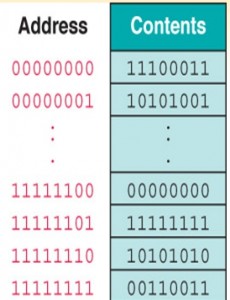

ALU ( The arithmetic logic unit) Chapter 5, p. 128
Computing Components
Stored-Program Concepts
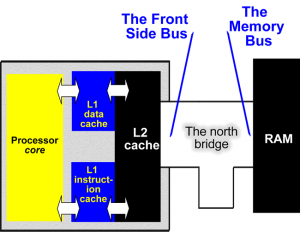
Embedded Systems
Parallel Architectures
self paced, and run by Cay Horstman a well known programming educator who, among other things, has worked with parts of the college board’s AP exam
Syllabus
Lesson 1: Introduction to Computers, Programming Languages, Algorithms, and the Java Programming Environment
Lesson 2: Introduction to Classes and Objects
Lesson 3: Graphics
Lesson 4: Fundamental Data Types
Lesson 5: Decisions
Lesson 6: Iterations
Lesson 7: Arrays, ArrayLists and Simple Array Algorithms
Lesson 8: Methods (Parameter Passing, Instance vs. Static Methods)
Lesson 9
Syllabus
Week 1: Introduction to computing systems from hardware, software and problem solving aspects
Week 2: Basic data types, variables, assignment statements and expressions
Week 3: Objects, classes and methods; scope rules, Java documentation
Week 4: Boolean expressions, control structures
Week 5: Loops
Week 6: Arrays and multidimensional arrays
Week 7: Character string and file I/O
Week 8: Recursion
Week 9: Abstract data type
Week 10: Simple event-driven programming and wrap up
: Inheritance
Web programming
Debunking the concept of the lone “genius programmer” coding alone in a cave, a Google IO talk

Installing Vim:
Overview of Vim, with some examples of what it can do for you
Some good Youtube vids
Plugins
Beyond the basics
Helpful Shortcut
Description: This method creates an array that is filled with all of the digits of
nums.
| Method Call | return value/output |
| digitsToArray( 523 ) | {5,2,3} |
| digitsToArray(1267 ) | { 1 , 2 , 6 , 7} |
Description: This method returns true if each element of
numsis a factor of the sum ofnums.
| Method Call | return value/output |
| allFactorsOfSum( {6,1,2,3} ) | true (because all of the elements are factors of the sum which is12) |
| allFactorsOfSum( {1,4,7 }) | false (because 7 is not a factor of the sum of this array which is 12) |
Description: This method returns a new version of
strswith each element appearing twice.
| Method Call | return value/output |
| doubleArr( {“a”,”b”,”c”} ) | {“a”,”a”,”b”,”b”, “c” , “c”} |
| doubleArr( {“math”,”ware”,”house”,”.com” }) | {“math”,”math”,”ware”,”ware”,”house”,”house”,”.com”, “.com”} |
Description: This method returns true if
numis an elementnums.
| Method Call | return value/output |
| isThere( {6,1,2,3}, 6) | true |
| isThere( {6,1,2,3}, 5 ) | false |
Description: This returns the index of the first occurrence element ‘5’ or -1 if 5 does not exist.
| Method Call | return value/output |
| indexOf5( { 2 , 3 , 5 , 4 } ) | 2 |
| indexOf5( { 2 , 3 , 5 , 4, 5 } ) | 2 |
| indexOf5( { 2 , 3 ,7 , 4, 3, } ) | -1 |
Description: This method returns the index value of the first appearance of
numor -1 ifnumis not an element ofnums.
| Method Call | return value/output |
| indexOf( {6,4 ,7,3, 4 }, 4) | 1 |
| indexOf( {6,4 7 ,3,2,7}, 7) | 2 |
| indexOf( {6,4 ,2,3}, 22) | -1 |
Description: This method returns the index value of the last appearance of
numor -1 ifnumis not an element ofnums.
| Method Call | return value/output |
| lastIndexOf( {6, 4 ,7 ,3, 11, ,4}, 4) | 5 |
| lastIndexOf( {7, 6,4 , 7 ,3}, 7) | 3 |
| lastIndexOf( {6,4 ,2,3}, 22) | -1 |
Description: This method returns true if each element in nums is greater than the element to its left.
| Method Call | return value/output |
| isIncreasing( {1,2,3,4 }) | true |
| isIncreasing( {1,0 ,3,4 }) | false |
| isIncreasing( {1,1, 2,3,4 }) | false |
| isIncreasing( {-1, –1, -2, -3, -4 }) | false |
Description: This method returns the largest span of consecutive increasing numbers
| Method Call | return value/output |
| largestSpan( {4, 3, 1, 3, 6 , 1} ) | 3 |
| largestSpan( {4 3 1 , 12 , 31 , 44 , 52 , 1} ) | 5 |
| largestSpan( {1 , 7 8 , 12,4, 3, 0, 4 , 1) | 3 |
Description: This method ‘inverts’ an array by spliting the array in halves and ‘inverting’ each half. See sample calls to understand.
| Method Call | return value/output |
| invert( {5 , 21, 5, 13,4 }) | {21 , 5 , 5, 4,13 } |
Description: This method returns the array with all digits shifted by
delta. Any digits that are circulated off the end of the array should be returned to the other side. Note: delta could be positive or negative. Please keep in mind that Math.abs(delta) > nums.length could be possible 😉
| Method Call | return value/output |
| shiftByN( {5 , 21, 13,4 } 1) | { 4 , 5 , 21, 13 } |
| shiftByN( {5 , 21, 13, 4 , 11} 2) | { 4 , 11 , 5 , 21, 13} |
| shiftByN( {5 , 21, 13, 4 } -1) | { 21, 13, 4 , 5} |
| shiftByN( {5 , 21, 13, 4 ,7 } -2) | { 13, 4 ,7 , 5 , 21} |
1 < base < 11num1.length = 5 and num2.length = 5Description: This method attempts to replicate addition. Consider both num1 and num2 represent the five digits of a number. Each element in the array stores one of the digits. For instance, the number 143 would be represented as {0,0,1,4,3 }. Numbers can be in any base between 2 and 10 inclusive , and the number 101102 in binary would appear in an arrays as : {1, 0, 1 , 1, 0 } . Let’s assume the numbers are positive.You should return an array representing the digits of the sum of num1 and num2. If the number of digits in the sum exceeds the maximum number of digits (5) , you should throw an arithmetic exception as shown in the code below:
if(overFlowAdditionOccurred)
 	throw new ArithmeticException("Addition Overflow Error");
Note: You may not use any kind of helper or utility methods that are built into pre-defined Java classes for converting numbers between bases. Only use techniques taught in this class.
| Method Call | return value/output |
| add( {0,0,0 ,4,2},{0,0,0,5,1}, 10) | {0, 0, 0, 9, 3} ie (42 + 51 = 93) |
| add( {0, 0, 0 ,7,2},{0,0,0,5,1}, 10) | {0, 0 , 1 , 2, 3} ie (72 + 51 = 123) |
| add( {0, 0 , 0 , 1 , 1}, { 0 , 0 , 0 , 1 }, 2) | {0, 0 , 1 , 0 , 0} ie ( 112 + 12= 1002 ) |